

We have now reached the final instalment of this little series, which I hope has at least helped begin to clear up the confusion for those who have struggled to understand what is wrong with the Novus Ordo Missae.
After the first part appeared, some commenters immediately asked why I didn’t address such-and-such points. As the title of this series indicates, this is merely a “beginner’s guide,” not an exhaustive, in-depth analysis of the entire problem. Each point I have listed over the three instalments could easily be expanded into a standalone essay. Therefore, this is it for now! So before anyone criticizes me for not covering the subject comprehensively, remember: it was always meant only as a starting point. God willing, we will return to the different aspects over time — perhaps under different guises.
That leads me to my final two thoughts before we dive into the third part:
First, it is of cardinal importance that you begin researching this subject on your own. You owe it to yourself, to your family and loved ones — and even more so to the God who demands worship befitting His holiness and majesty.
Second, I want to encourage those readers who have never attended a Traditional Latin Mass (TLM) to make a plan to do so. Even if it means going on a bit of a road trip — do it. Pack your family and hit the road. If you don’t have a TLM nearby, I encourage you to make the effort once a month, or as often as you can. The Holy Scriptures tell us that if we draw near to God, He will draw near to us. I firmly believe that if your desire is to seek and worship God through the Mass of the Ages, He will provide the opportunity.
Now, let us turn our attention to the final set of problems with the pseudo-Protestant Novus Ordo Missae.
I. The Collapse of Ritual Precision and Rubrical Discipline
Among the most startling differences between the traditional Roman Rite and the Novus Ordo Missae is the collapse of ritual exactness. The old rite did not simply encourage reverence; it enforced it. Every gesture, every tone of voice, every inclination of the head had been tempered by centuries of theological instinct. These rubrics were not shackles but safeguards. They ensured that the sacred action remained untouched by the ever-restless creativity of the celebrant.
In the traditional Mass, the priest’s thumbs and forefingers remain joined from the moment of Consecration until the ablutions. This simple gesture is a theology of the Real Presence expressed without a word. The priest purifies his fingers multiple times precisely because the Church assumes that the smallest fragment of the Host remains Christ entire. Even accidental mistakes are carefully prescribed: some require repetition, others correction, none are ignored.
This world of disciplined reverence contrasts sharply with the permissiveness of the Novus Ordo, whose rubrics are saturated with hesitation: “may,” “if appropriate,” “according to circumstances.” Silence becomes optional. Precaution regarding fragments nearly vanishes. Gestures are simplified or discarded. What was once demanded is now suggested.
The consequences of this shift appear everywhere. In the traditional Mass, the priest bows his head at every utterance of the Name of Jesus—a bodily catechism repeated dozens of times. In the new rite, the gesture is optional and rarely seen. The ancient hierarchy of sacred speech—vox clara, vox mediocris, vox secreta—has evaporated, flattening the Mass’s acoustic texture. And nowhere is the shift more telling than in the widespread habit of priests modifying the texts, inserting greetings, jokes, or personal commentary in place of the fixed formulas. Such alterations would have been unthinkable in the old rite, not out of clerical rigidity, but because the Mass did not belong to the priest.
The ritual precision is not merely fussy traditionalism. It is reverence trained into the body. When the rubrics collapse, so too does the instinct that one stands on holy ground.
II. The Disappearance of the Fear of God
Fear of the Lord—a biblical virtue, the beginning of wisdom—is woven deeply into the older liturgy. Not fear as panic, but fear as awe before the divine majesty and dread of sin’s consequences. The traditional Mass speaks unflinchingly of judgment, wrath, punishment, and eternal death. Its prayers request deliverance from damnation with a frankness that modern religious sensibilities often find unsettling.
The postconciliar reforms softened or removed many such references. Texts invoking divine judgment were edited or eliminated. The faithful rarely hear the language of death or wrath. The entire eschatological dimension of worship was gently wrapped in cotton.
When the fear of God disappears, the sense of sin dissolves with it. And once sin becomes a faint abstraction, redemption itself ceases to be felt as urgent.
III. The Decline of Eucharistic Fasting and Ascetic Preparation
For centuries, the Church required the faithful to fast from midnight before receiving Holy Communion. This discipline, though demanding, etched the Eucharist into the body itself. Hunger became a preparation. The body knew it was approaching the divine.
Today, the fast is one hour—negligible, often forgotten, and easily satisfied by the walk from the car to the church door. Communion has become casual. It is received frequently, with minimal preparation, and often without Confession for years.
Once, Catholics arranged their day around the Mass. They dressed formally, arrived early, prayed long after the dismissal, and approached Communion infrequently but with trembling devotion.
Now Communion is treated as a birthright, not a burning gift. This shift is no accident: external discipline forms internal reverence. When the former vanishes, the latter withers.
IV. The Horizontalization of the Our Father and the Sign of Peace
Two parts of the Novus Ordo reveal its anthropocentric tilt with painful clarity.
The Our Father—once chanted in solemn hierarchy—has often become a communal gesture of hand-holding, outstretched arms, and casual melody. These postures, never mandated, visually erase the distinction between priest and people.
The Sign of Peace, inserted at the threshold of Communion, frequently erupts into chatter, turning, waving, and social warmth—precisely when the soul should be recollected and trembling before the impending reception of the Body and Blood.
The result is a rupture in the sacrificial flow of the liturgy at its most sacred moment.
V. Psychological and Spiritual Consequences
Liturgy forms souls. Not through instruction alone, but through repetition, posture, atmosphere. The body learns concepts the mind cannot articulate.
The Novus Ordo forms a different spiritual personality entirely—one less ascetical, less mystical, more expressive, more horizontal. A generation raised on amplified microphones, casual greetings, and permissive rubrics will inevitably possess a spirituality shaped by those sensory realities.
The old Mass formed contemplatives almost by accident. The new Mass forms activists almost by design.
VI. Vocations and the Language of Sacrifice
That seminaries attached to the traditional liturgy flourish disproportionately is no mystery. Young men drawn to the priesthood are drawn to sacrifice, transcendence, and the sacred. The TLM dramatizes sacrifice; the priest is mediator, not emcee. The sanctuary is a battlement; the altar a place of death and offering.
The Novus Ordo, in many parishes, reduces the priesthood to a form of pastoral leadership or community facilitation. Young men who long to offer sacrifice respond accordingly: they go where sacrifice is depicted, revered, and demanded.
VII. Authority, Obedience, and Tradition
Traditional critics reject the charge that they are disobedient. For them, obedience is fidelity to what the Church has always guarded—not unthinking submission to innovations that rupture continuity. Liturgy belongs not to popes, bishops, or committees, but to the Church universal across time. Authority exists not to reinvent tradition but to preserve it.
Their position is simple: reform must grow organically, not by fiat.
VIII. The Problem of Music in the New Mass
Music is not decoration; it is theology expressed through sound. The Church has always insisted that sacred music must be holy, beautiful, and universal. Gregorian chant, far from being an aesthetic preference, is the Church’s own native voice.
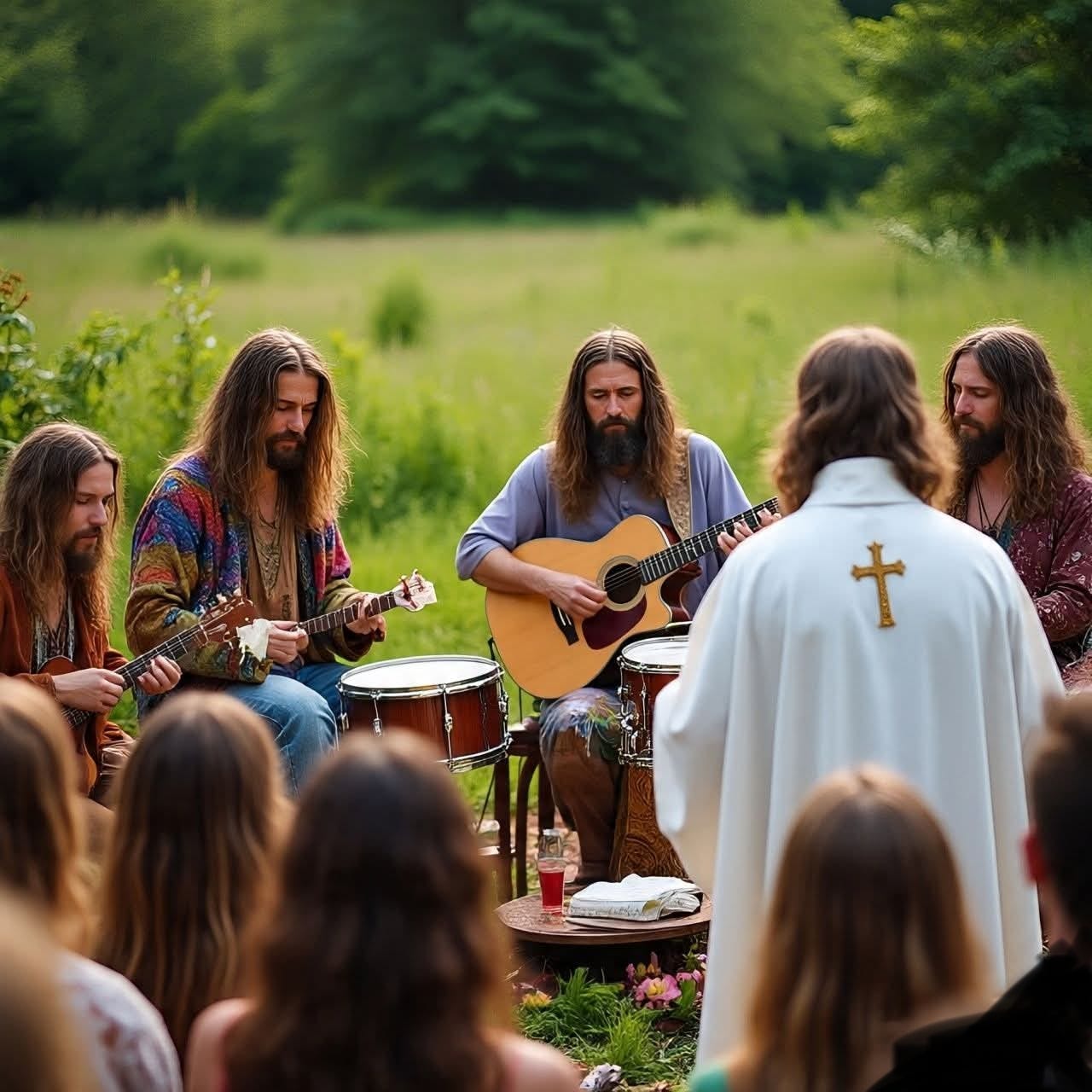
The Novus Ordo era witnessed a musical revolution—one of the most devastating shifts in Catholic worship. Folk hymns, pop ballads, sentimental refrains, and mass-produced liturgical ditties replaced chant and polyphony almost overnight. Guitars replaced organ; emotional accessibility replaced sacred transcendence.
The result is not merely a difference in taste. It is a difference in doctrine.
Chant is hierarchical, contemplative, otherworldly. It lifts the soul upward. Its rhythms are not enslaved to emotional manipulation. Its beauty is subtle, ascetical, and ordered.
Modern hymns, by contrast, often focus on ourselves: our community, our feelings, our journey. Their rhythms mirror the idioms of entertainment. Their lyrics are frequently didactic, horizontal, or even banal. The music forms the congregation spiritually—and it forms them toward sentiment rather than contemplation.
Concrete examples abound. One need not compare Palestrina to “On Eagle’s Wings” or the Missa de Angelis to “Here I Am, Lord” to sense the chasm. One tradition arose from centuries of prayer and penance; the other from the musical vocabulary of radio jingles and campfire choruses.
The devastatingly poor music found in parishes today is yet another cancer of a liturgy increasingly centered on human engagement rather than divine worship.
We are going to end our final essay in this series on a grave note:
Is There a Possibility That the Novus Ordo Consecration Is Invalid?
The question of whether the consecration in the Novus Ordo Missae may be invalid has been raised by several traditionalist writers, among them Rama P. Coomaraswamy and Fr. Anthony Cekada. While they differ in emphasis and final conclusions, their arguments can be integrated into a single, cohesive theory that explores how changes in the post-Vatican II liturgy could, at least in principle, jeopardize the validity of the Eucharist. This blended perspective does not assert a dogmatic judgment by me, but instead proposes a theological and sacramental possibility grounded in classical Catholic teaching.
The first pillar of this unified theory concerns the form of the sacrament—the words Christ instituted for consecration. Both thinkers argue that modifications introduced into the new rite may obscure the sacramental formula. In the traditional Mass, the Words of Consecration stand out as a direct, operative act spoken in the first person: “This is My Body... This is My Blood.” In the Novus Ordo, however, those words are embedded within a longer institution narrative, recited more like a scriptural account than a decisive act of sacramental efficacy.
This narrative structure can give the impression that the priest is recounting history rather than acting in persona Christi. If the sacramental words are presented as part of a story, rather than as a performative formula by Christ through His priest, then one could argue the essential form becomes at least ambiguous. Sacramental theology teaches that ambiguity in form can result in doubtful validity. In this sense, even if the words themselves are not substantially changed, the way they are situated within the rite may affect their sacramental character.
A second cornerstone of the theory concerns sacramental intention. According to classical theology, the Church ensures the priest’s intention to “do what the Church does” not primarily by psychological effort but through the rite itself. If a rite clearly expresses Catholic doctrine—particularly the notion of the Mass as a sacrificial act—the priest’s intention is naturally aligned with the Church’s intention.
However, both Coomaraswamy and Cekada note that the Novus Ordo’s structure and language emphasize a memorial meal and “assembly,” while de-emphasizing the Mass as a propitiatory sacrifice. The offertory prayers were rewritten to remove sacrificial language, and the overall tone of the rite became more horizontal, less theological, and more focused on communal participation. In such a context, the rite itself may fail to guarantee that the priest intends to effect a sacrificial transformation, rather than simply preside over a symbolic or communal celebration.
If intention is embedded in the rite, and the rite’s theological content shifts, it follows that the necessary intention might be absent or doubtful. A doubtful intention, like a doubtful form, yields a doubtful sacrament.
Blending the arguments further, both authors maintain that the reforms of the Mass were carried out under a spirit of ecumenism, aiming to produce a rite acceptable to those who deny the sacrificial priesthood and the Real Presence. If the architects of the new rite intentionally shaped it to be compatible with Protestant theology—removing elements explicitly rejected by the Reformers—then the rite may no longer clearly embody the Catholic understanding of the Eucharist.
A sacramental rite is not merely a vehicle for words; it is a theological act. If the theology embodied in the rite no longer aligns with the Church’s perennial teaching about the Mass, the rite may no longer function as a valid sacrament. In this integrated view, theological drift can directly influence sacramental efficacy.
The combined perspective leads to a classical sacramental conclusion:
If form, intention, or the theology that undergirds the rite are rendered doubtful, then the validity of the sacrament becomes doubtful.
This does not require proving absolute invalidity. Catholic theology has long maintained that a sacrament must be not only valid, but certainly valid, because it deals with the worship owed to God and the salvation of souls. If the Novus Ordo introduces enough ambiguity in its wording, structure, and doctrinal expression that the priest’s action can no longer be confidently interpreted as the sacrificial act instituted by Christ, then one must at least raise the possibility that some celebrations of the new rite may fail to effect transubstantiation.
Coomaraswamy’s cautious skepticism and Cekada’s systematic critique can be melded into a single, unified theory: the Novus Ordo Missae may possess structural, linguistic, and theological deficiencies that introduce real and objective doubt into the validity of its consecration. The issue is not necessarily that every celebration is invalid, but that the rite—by design—may fail to consistently safeguard the essential conditions for a valid sacrament.
Thus, the question “Is there a possibility that the consecration is invalid?” receives, within this blended theory, a sober answer:
Yes, there is a possibility—because the post-Conciliar reforms introduced changes that can obscure the form and intention required for a valid Eucharistic sacrifice.
Whether one accepts or rejects this conclusion, the theory provides a serious theological framework for examining one of the most critical questions in the post-Vatican II Church.
Tradition as the Memory of the Church
The Novus Ordo Missae is the Mass most Catholics know. Its familiarity is not in question. But familiarity is not the measure of adequacy and familiarity is definitely not the measure of lawfulness OR of what is pleasing to Almighty God.
The criticisms outlined over the past three instalments arise from a sober recognition that something essential was lost—something that had formed saints for centuries.
It also recognises that what was lost has been replaced by something terribly inadequate and destructive.
The composer Gustav Mahler said “Tradition is not the worship of ashes but the preservation of fire”. When the liturgy loses its memory, the faithful lose their sense of eternity. When the Mass loses its transcendence, the Church loses her seriousness.
This critique of the Novus Ordo is finally a plea: that the Church remember who she is. That the sanctuary once again be holy ground. That the priest stand once more facing God. That the Mass look, sound, and tremble with the divine drama of Calvary.
I will pray for you dear reader. For wisdom, courage, providence and grace to make the right decision for your eternal soul.
Our Lady, Co-redemptrix, pray for us…
Our Lady, Mediatrix of all Graces, pray for us…
Viva Christo Rey!
Also Read:
“Christ is a Failed Individual” and Other New Blasphemies from the Synodal Dumpster Fire
Is This the Sanest Position for Faithful Catholics to Hold Regarding Post-Conciliar Popes?
Pope Claims Christians and Muslims Worship Same God at Interfaith Spectacle in Beirut
Enjoyed the series especially the 3rd on the invalidity of the Consecration in the Novus Ordo Missae.
A huge problem regarding the NO Masses is the lack of silence before, during, and after Mass. It bothers me to no end; I have to fight against judging noisy, talkative parishioners. I sit in the front pew to minimize distractions, eg, to avoid seeing raised hands during the Our Father, and doing the distracting, different signs of peace. I’ve been offering these trials to Jesus in reparation for my sins and those committed against the Holy Name and Face of Jesus so that my suffering doesn’t go to waste.
I belong to an FSSP parish but currently need to attend daily NO Masses to save on gas due to financial difficulties. When all is OK, I’ll be able to attend my parish for all the TLMs again. I hope my words are charitable❤️