
Interview With SSPX Superior General Fails to Address the Real Problem
The most glaring reality is that Rome has been infiltrated by advocates and members of a hierarchy aligned with a religion alien to Catholicism.

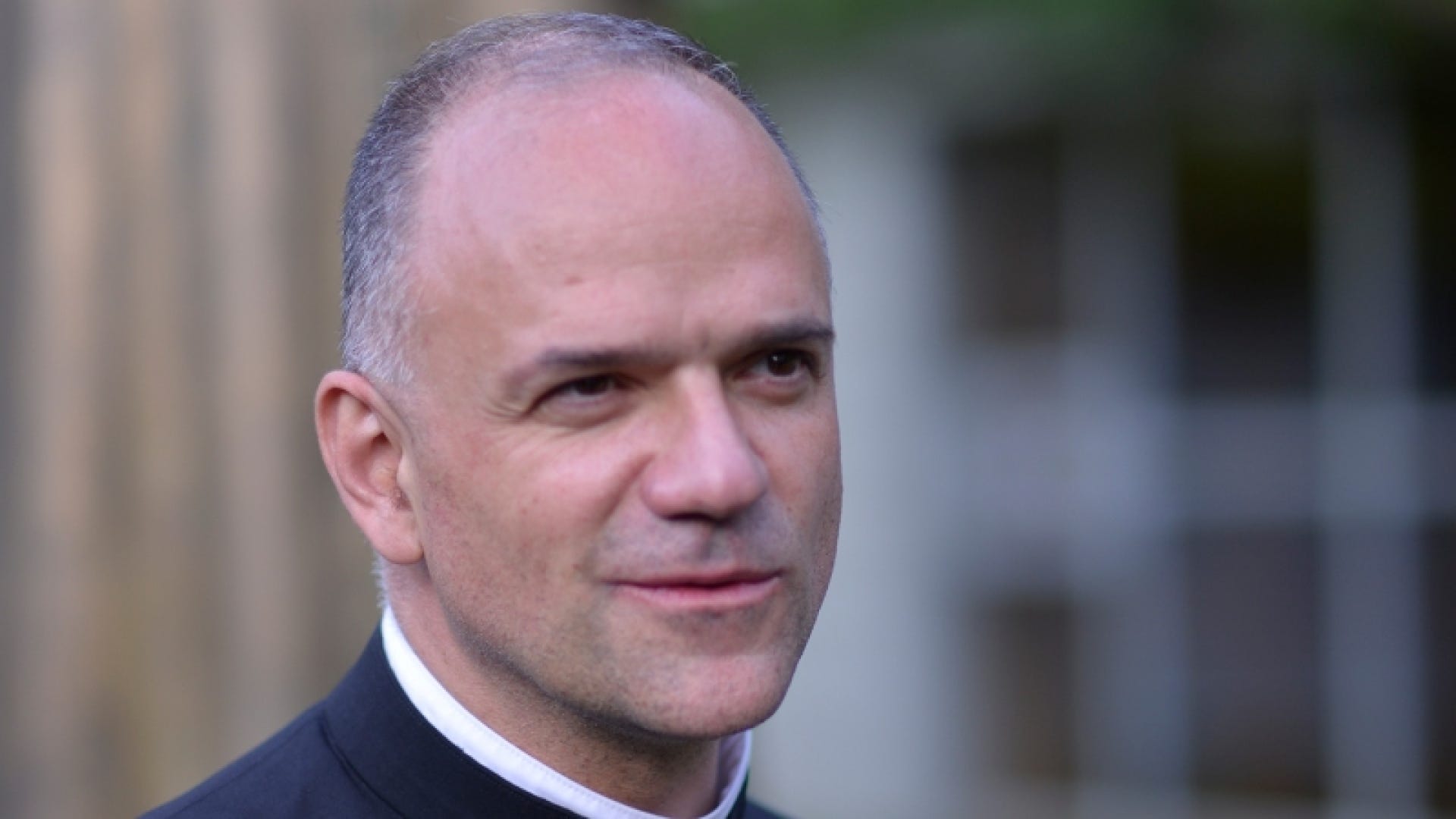
The person or persons behind the Unam Sanctam Catholicam blog made me smile yesterday with their post on Facebook, which ended with the following piece of prophetic wisdom regarding the announced SSPX consecrations:
“...the only thing that is absolutely certain is that we will all have to endure months of hearing everyone’s retarded-ass opinions on the matter.”
So, my friends, here are some more of my own “retarded-ass opinions” on the interview with Fr. Davide Pagliarani, the Superior General of the SSPX, that was published this morning (February 5) on the FSSPX News site.
The interview includes several much-needed truths, but it is also riddled with problematic statements and arguments that only underscore problems I discussed in my previous articles as well as during my interview on Kokx News. There were welcome reaffirmations of truths that have been obscured for decades, but also a persistent desire to remain intelligible, acceptable, and reconcilable to an apostate Rome that has shown itself to be engaged in a full-out war with Tradition.
The result is a text that contains genuine clarity alongside troubling ambiguity.
What the Interview Gets Right
First, credit must be given where it is due.
The Superior General speaks forcefully and accurately about the state of necessity in the Church. His diagnosis is correct and long overdue. It is an observable fact that ordinary parishes no longer reliably provide integral Catholic doctrine, moral teaching, or the sacraments as the Church has always administered them. Fr. Pagliarani’s insistence that souls are deprived of what they require for salvation goes right to the heart of the crisis, and he rightly invokes suprema lex, salus animarum as the governing principle.
Equally commendable is his unambiguous condemnation of the Abu Dhabi declaration, which he correctly identifies as incompatible with the First Commandment and the Creed. To say plainly that such a statement is inconceivable, corrosive to communion, and something one should prefer martyrdom to accepting is the kind of Catholicism we want to hear from our prelates.
His critique of synodality, the kerygmatic reduction of doctrine, and the manipulation of the Holy Ghost as justification for arbitrary decisions is likewise incisive. The interview exposes the method behind the madness we see today: doctrine emptied in favor of “experience,” Tradition reclassified as mere accessory, and truth replaced by process. On these points, the Superior General speaks with admirable clarity.
His analysis of the liturgical question is also largely sound. He correctly recognises that the coexistence of two incompatible rites is not a neutral pastoral arrangement but the manifestation of two rival theologies. His identification of the Novus Ordo as intrinsically incapable of forming souls, rather than merely poorly celebrated, should draw cries of “Bravo!” from the gallery.
Finally, Pagliarani is entirely correct in insisting that priests and bishops, not influencers and commentators, are needed for the sanctification of souls.
Where the Interview Falls Short
For all its strengths, the interview remains constrained by language and a posture that feels inadequate to the present realities. The most glaring reality is that Rome has been infiltrated by advocates and members of a hierarchy aligned with a religion alien to Catholicism.
The most striking weakness is the continued insistence on framing the Society’s actions as a request for tolerance, pragmatism, or paternal understanding from a Rome that has defected from Catholicism. The repeated appeals to the Pope as “father,” capable of recognizing good intentions, subtly imply that the problem is one of misunderstanding or lack of information. This no longer corresponds to reality.
To continue speaking as though recognition, approval, or even tolerance from the Holy See would be a neutral good obscures the deeper issue that Rome is no longer merely failing to protect Tradition. It is actively opposing it. Seeking legitimacy from authorities who promote synodality, religious indifferentism, and a counterfeit ecclesiology appears incoherent and deeply dissonant.
This leads to another concern, namely the language of “irregular canonical status” and “communion with the hierarchy.” Communion, as the Superior General himself acknowledges elsewhere, is founded upon the Catholic faith. If that is the case, then the logic must be followed: those who publicly advance doctrines contrary to that faith have already ruptured communion in substance, regardless of whatever canonical structures they continue to occupy. Archbishop Lefebvre warned, and I paraphrase, that compromise with Rome should only be sought if Rome converts.
One cannot indefinitely maintain that communion exists in principle while conceding that its doctrinal foundations have collapsed in practice.
As I pointed out earlier this week, there is a huge problem with the interview’s implicit hope that episcopal consecrations might be tolerated, accepted, or later justified by Rome, just as illicit consecrations in China have been retroactively approved. This comparison may sound reasonable on the surface, but it exposes a deeper problem. It suggests that legitimacy still flows from the very authorities whose actions created the crisis. Pagliarani and the SSPX should ask themselves whether they wish to be in communion with the false Communist bishops of China or any of the other abominations currently taking place in Rome.
It also seems contradictory to claim that the consecrations are truly justified by necessity, as they are, while also holding that their legitimacy would depend on later Roman approval. Either the crisis justifies the consecrations or it does not. To suggest that the consecrations will hopefully be legitimized by the illegitimate authorities who caused the crisis makes no sense.
The Unspoken Question
The interview circles repeatedly around a question it never directly confronts:
If Vatican II and its fruits are the root of the crisis, why seek recognition from those who define themselves by that council?
The Superior General speaks eloquently about preserving Tradition for the Pope and for the Church until it is understood, but this assumes a continuity of faith and intention that no longer exists at the level of governance.
By continuing to present Tradition as something preserved within an abnormal structure rather than over against a false religion, the interview reinforces the illusion that allows the crisis to persist. It sustains the idea that the post-conciliar religion is still Catholic, merely confused. It is not Catholic.
If episcopal consecrations are to be carried out, as they should be, they must not be framed as a plea for tolerance or as a temporary irregularity awaiting future reconciliation. They must draw the line clearly, as Archbishop Lefebvre did in 1988, between Catholicism and the counterfeit religion produced by Vatican II.
Our Lady, Co-redemptrix, pray for us…
Our Lady, Mediatrix of all Graces, pray for us…
Viva Christo Rey!
Also Read:
Video: Kokx News & Radical Fidelity Break Down the SSPX’s Upcoming Consecrations
Why I Prefer Modernist Rome’s Disapproval of SSPX Consecrations Rather than its Approval
BREAKING: SSPX’s Announcement of New Consecrations Once Again Exposes the Abomination in Rome
Your Good Intentions to Save Your Parish Might be Paving the Way to Hell
Excellent article, thank you. Your statement that "the SSPX should ask themselves whether they wish to be in communion with the false Communist bishops of China or any of the other abominations currently taking place in Rome." is precisely the point, but it is too kind. In fact, one could argue that as long as Rome continues to defend and even promote sins like heresy, apostasy, ecumenism, and homosexuality, NO ONE should tolerate anything coming from that den of Satan, for its "managers" can no longer claim to be Catholic in any way other than in name only. May the heretics in the ape of the church repent of their sins and renounce the countless evils of V-II so they can return to their primary obligation of salus animarum, suprema lex.
Fantastic article! I couldn't have put it better. What's going on in the Vatican is not Catholic.