

…If It Doesn’t Lead to Holiness
“This is the will of God, your sanctification” (1 Thess. 4:3).
Traditional Catholicism is nothing if it does not lead to holiness. The Latin Mass, the rosary, Gregorian chant, the old catechisms—all of these are but scaffolding. They exist not for themselves but to raise souls to God. St. Ignatius of Loyola declared: “The end of man is to know, love, and serve God, and thereby attain to eternal life.”
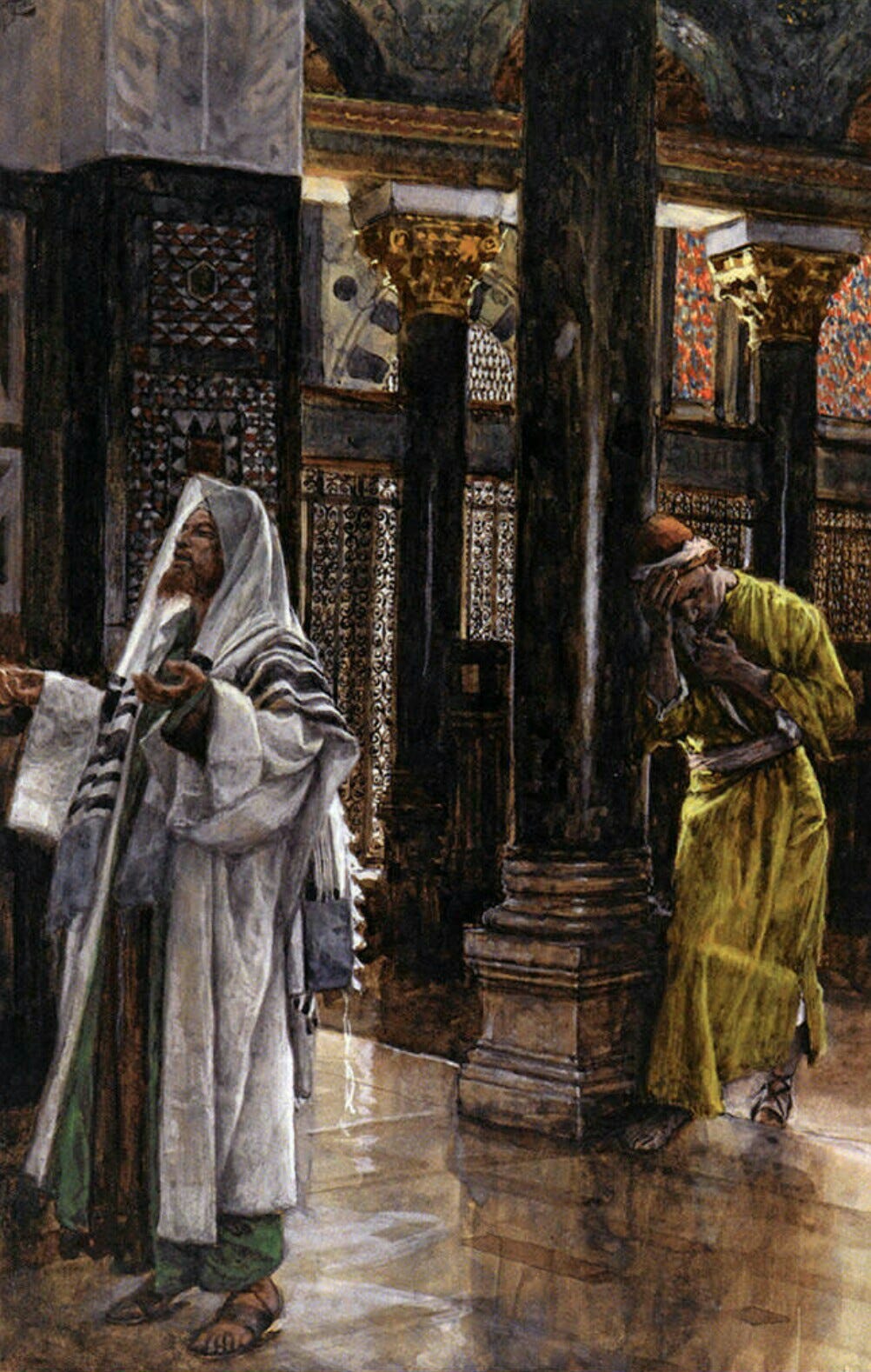
If our devotion to Tradition becomes merely aesthetic, it is already corrupt. Beauty is a ladder to God, but if we spend our time staring at the rungs and never climb, we remain on the ground. The Pharisees loved the externals of religion yet missed Christ Himself. Our Lord warned them: “This people honoureth me with their lips: but their heart is far from me.” (Mt. 15:8).
Tradition without holiness is empty ritualism. Lace and chant without virtue are mockeries before the throne of God.
…If It Is Not Steeped in Doctrine
“And you shall know the truth, and the truth shall make you free.” (Jn. 8:32).
Traditional Catholicism means nothing if it is not steeped in doctrine. The faith is not a vague spirituality, nor a set of comforting rituals, nor a cultural ornament; it is the revealed truth of God handed down through the apostles, Fathers, councils, and the Magisterium of the Church.
Our Lord did not commission His apostles to invent ceremonies or weave traditions of their own. He commanded: “Go ye into the whole world, and preach the gospel to every creature. He that believeth and is baptized, shall be saved: but he that believeth not shall be condemned.” (Mark 16:15-16). The lex orandi of Tradition (the law of prayer) is inseparable from the lex credendi (the law of belief). The Mass, the rosary, the breviary, the chants—all are embodiments of Catholic doctrine. Strip away the doctrine, and they become empty shells.
St. Vincent of Lérins taught in his Commonitorium: “in the Catholic Church itself, all possible care must be taken, that we hold that faith which has been believed everywhere, always, by all. For that is truly and in the strictest sense Catholic,” This is the true test of Tradition. It is not preference for Latin over vernacular, or aesthetics over banality. It is fidelity to the deposit of faith.
The crisis of the modern Church is, above all, doctrinal. To resist modernism, we must not only preserve the old liturgy but immerse ourselves in the perennial teaching of the Church: the catechism of Trent, the encyclicals of the popes, the theology of St. Thomas, the writings of the saints.
Without doctrine, Tradition becomes sentimentality or something akin to the woke mob’s virtue signalling. It becomes a love of old things for their own sake, rather than fidelity to divine truth. Without doctrine, we risk becoming like those St. Paul warned of: “having the appearance of godliness, but denying its power” (2 Tim. 3:5).
Therefore, the true traditionalist is a student of the faith. He knows his catechism. He studies the Doctors. He reads the encyclicals. He passes on the teaching to his children. Tradition without doctrine is superstition. Tradition steeped in doctrine is the very life of the Church.
…If It Doesn’t Lead to Conversion of Heart
“No, I say to you: but unless you shall do penance, you shall all likewise perish.” (Lk. 13:3).
What good is the Traditional Latin Mass if our hearts remain unconverted? The priest may whisper the Roman Canon with perfect rubrical precision, the choir may sing Palestrina, but if we approach the altar without repentance, we crucify Christ anew.
St. Augustine, once a slave to lust and pride, converted when he opened the Scriptures and heard: “But put ye on the Lord Jesus Christ, and make not provision for the flesh in its concupiscences” (Rom. 13:14). This is the fruit Tradition must bear: conversion.
Confession must be frequent and sincere, not perfunctory. True Tradition demands contrition, humility, and amendment of life. Without that, even the most solemn liturgy condemns us. The Sacrifice of the Mass is not a performance; it is Calvary. Woe to us if we attend but do not repent.
…If It Doesn’t Lead to Charity
“And if I should have all faith, so that I could remove mountains, and have not charity, I am nothing.” (1 Cor. 13:2).
Traditional Catholicism means nothing if it does not lead to charity. The devil laughs at a proud traditionalist. He rejoices when we sneer at “Novus Ordo Catholics” but fail to love them. He delights when we know every papal bull of Pius V but ignore the beggar outside the church door.
St. John warns us: “If any man say, I love God, and hateth his brother; he is a liar. For he that loveth not his brother, whom he seeth, how can he love God, whom he seeth not?” (1 Jn. 4:20). St. Thomas Aquinas teaches that charity is the form of all the virtues; without it, even acts of religion are lifeless.
If our devotion to Tradition makes us harsh, proud, or uncharitable, then it is not Tradition at all but Pharisaism. A parish with beautiful liturgy but without charity is a whitewashed tomb. The true test of Tradition is whether it forms communities of supernatural love.
…If It Doesn’t Lead to the Sacramental Life
“Then Jesus said to them: Amen, amen I say unto you: Except you eat the flesh of the Son of Man, and drink His blood, you shall not have life in you.” (Jn. 6:54).
The Mass of Ages is the source and summit of the Church. But it is not enough to assist reverently at the liturgy. We must live the sacramental life. Frequent confession, worthy reception of Holy Communion, Confirmation lived as militancy for Christ—these are the fruits of Tradition.
Pope Pius XII, in Mystici Corporis, reminds us that the Church lives through the sacraments: “Through the waters of Baptism those who are born into this world dead in sin are not only born again and made members of the Church, but being stamped with a spiritual seal they become able and fit to receive the other Sacraments. By the chrism of Confirmation, the faithful are given added strength to protect and defend the Church, their Mother, and the faith she has given them. In the Sacrament of Penance a saving medicine is offered for the members of the Church who have fallen into sin, not only to provide for their own health, but to remove from other members of the Mystical Body all danger of contagion, or rather to afford them an incentive to virtue, and the example of a virtuous act.” Without them, Tradition is a corpse.
If the ancient rites do not lead us to deeper reverence for the sacraments, we have missed their point. We must tremble before the altar, prepare for Communion, and confess with sincerity. Otherwise, our liturgy is but an empty show.
…If It Doesn’t Lead to Asceticism and Penance
“But Peter said to them: Do penance, and be baptized every one of you in the name of Jesus Christ, for the remission of your sins: and you shall receive the gift of the Holy Ghost.” (Acts 2:38).
The saints remind us that there is no holiness without sacrifice. Tradition is not comfortable; it is cruciform. The old fasts, the Ember Days, the Friday abstinence—all these disciplines are not nostalgia but weapons of sanctification.
St. John Vianney declared: “Do not try to please everybody. Try to please God, the angels, and the saints—they are your public.” That requires mortification. St. Rose of Lima was known for severe self-mortification. She wore a metal spiked crown concealed by roses and an iron chain around her waist. She slept on a bed made of broken glass, stones, and thorns and often went for days with only the Eucharist for sustenance because she embraced penance with love and summarised this path in her famous statement that “Apart from the Cross, there is no other ladder by which we may get to heaven”.
But what do we see today? Some dress in mantillas and cassocks but indulge in every worldly luxury. Some boast of Gregorian chant but cannot endure a single fast. Lace without penance is hypocrisy. Chant without sacrifice is noise. Tradition must make us penitents, not aesthetes.
…If It Doesn’t Lead to Apostolic Zeal
“Going therefore, teach ye all nations; baptizing them in the name of the Father, and of the Son, and of the Holy Ghost.” (Mt. 28:19).
Tradition is not meant to be hoarded but shared. The saints did not cling to their treasures in private—they evangelized. St. Francis Xavier crossed oceans with nothing but the faith. St. Francis of Assisi rebuilt the Church by his holiness
If we treat Tradition as a private club for the initiated, it will die with us. If we refuse to evangelize, catechize, and draw others into the riches of the Faith, we betray it. Tradition is not a museum; it is a fire. And fire spreads.
If our love for Tradition does not inflame us with missionary zeal—toward our families, our neighbors, our parishes, the world—then it is not love at all but cowardice. Especially in a time when the Pope is more concerned with “ecological conversions” and confirming sinners’ wicked lifestyles than leading souls to Christ.
…If It Doesn’t Lead to Love of the Cross
“Then Jesus said to his disciples: If any man will come after me, let him deny himself, and take up his cross, and follow me.” (Mt. 16:24).
Traditional Catholicism means nothing if it does not lead to love of the Cross. The Mass is Calvary. Every chant, every rubric, every genuflection points to the Sacrifice of Christ crucified.
Yet how often do we want Tradition without suffering? We want beauty without pain, reverence without persecution, faith without sacrifice. But Tradition that does not conform us to the Cross is false.
St. Paul of the Cross said: “The cross is the way to Paradise, but only when it is borne willingly” And St. Paul declared: “With Christ I am nailed to the cross. And I live, now not I; but Christ liveth in me” (Gal. 2:20). Tradition without the Cross is theatre. Tradition with the Cross is salvation.
…If It Doesn’t Lead to Eternal Life
“For what shall it profit a man, if he gain the whole world, and suffer the loss of his soul?” (Mk. 8:36).
The end of Tradition is heaven. If it does not lead us there, it is worse than worthless—it is damnable. “Outside the Church there is no salvation,” declared the Fathers. But inside the Church there is no salvation either if one remains unrepentant, uncharitable, and unholy.
St. Alphonsus Liguori reminds us: “The business of our eternal salvation is the most important affair, and yet it is the most neglected by Christians.”
We must tremble at this. The ancient Mass, the catechisms, the sacraments—these are ladders. If we cling to them but never climb, they will testify against us on Judgment Day. Tradition means nothing unless it saves our souls.
Tradition Is Everything Only If It Leads to God
Traditional Catholicism means nothing if it does not lead to holiness, conversion, charity, the sacraments, penance, zeal, the Cross, and eternal life. But if it does, then it means everything.
Tradition is not nostalgia, not ideology, not aesthetics. It is the living faith of the saints, the perennial truth of Christ, the way to heaven. If we embrace it with humility and fidelity, it will sanctify us and renew the Church. If we cling to it with pride and worldliness, it will condemn us.
The saints are the only true traditionalists. Let us, then, become saints—or else our “traditionalism” is nothing but ashes.
PS: Make sure to follow us on X at @Radical_Fidelit
Christus vincit!
Christus regnat!
Christus imperat!
Also Read:
Pope Defends Award to Pro-Abortion Senator (and Promotes Religious Indifferentism in Prayer)
Pope’s Latest Comments Reveal Secularism Masquerading as Catholic Wisdom
Was This the Primary Cause of the Abominable Failures of Vatican II?
MUST READ: New Research Again Vindicates TLM and its Adherents
A Testimony on Our First Birthday: Whatsoever He Shall Say to You, do Ye
It seems to me that the NO war on the TLM is being used by God to call those who call themselves "traditional" Catholics back to the core of the faith. Those who, by geographical happenstance, find themselves lucky enough to attend the TLM and receive the sacraments using the traditional rites run the risk of confusing the means of sanctification with their end, which is holiness and all the other attributes you mention. Those who find themselves bereft of convenient access to the traditional rites are far more likely to delve more deeply into the mystery of the Church, the beauty of her teachings, the wonder of her persistent presence throughout history despite the manifest failings and sins of her leaders and followers, and to examine their conscience and the state of their soul more carefully. I know that's true for me. I have to travel 3 to 4 hours one way in any direction to receive any of the traditional sacraments from priests ordained using the traditional rite, especially confession and the Eucharist. Even the nearest NO parishes are one to two hours away, and based on the masses I have attended there, they don't take sin or sanctification seriously.
For those who may be in a similar bind, I recommend using your situation to deepen your faith by reading one of the traditional catechisms (the Tradivox series at tradivox.com is a good place to start); praying the rosary with one of the many companion volumes of art and scriptural commentary on the mysteries (the folks at loretopublishing.com just put out two excellent rosary companions [The Liturgical Rosary, and The Art of the Holy Rosary] that are excellent helps to meditation and contemplation); and delving into the writings of the spiritual masters (TAN books has an excellent collection of these at tanbooks.com).
Whatever you decide to do, don't let your spiritual despondency get the best of you. Do SOMETHING to take advantage of God's wakeup call to you. I can tell you from experience that "it ain't easy", but (to my shame) I have never felt more personally invested in the state of my soul and in my own sanctification and salvation. Would I attend the TLM if I suddenly had access to it? Of course. But I would attend it with a far greater appreciation of its value, its mystery, its beauty, and its efficacy.
To paraphrase Flannery O'Connor, if it doesn't lead to holiness, to hell with it!