

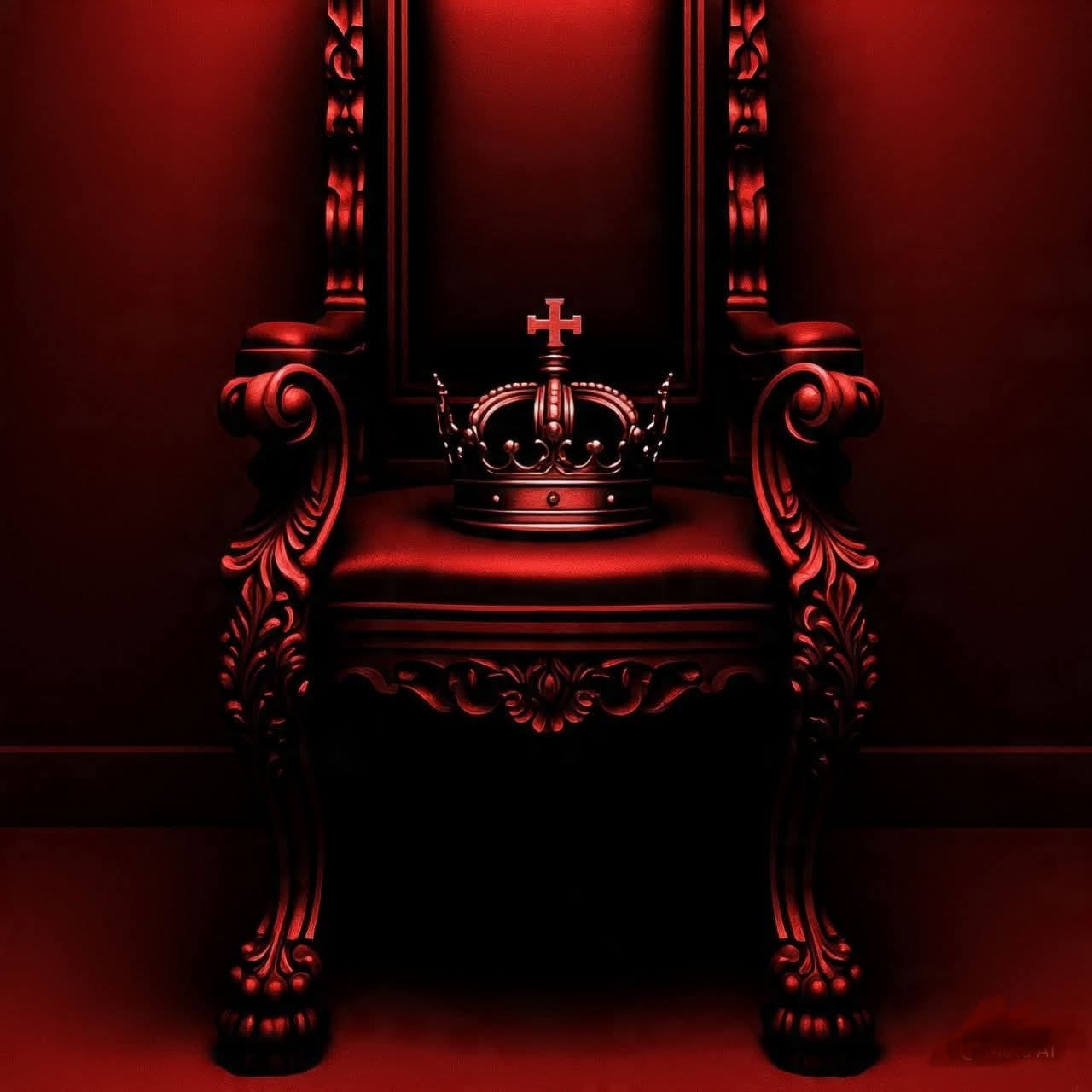
“It is only when men live their lives within the correct perspective of the Creator-creature relationship that social and political harmony and order prevail. “The peace of Christ in the kingdom of Christ.” When men repudiate this relationship, disharmony and disorder introduced for the first time by Lucifer, once the most magnificent of all God’s creatures, who overcome with pride, boasted: Non serviam - “I will not serve.” The Catechism teaches us that our purpose in life is to know, love, and serve God in this world so that we can be happy with Him forever in the next. We cannot claim to love God if we do not serve Him, and we cannot claim to serve God if we do not subject ourselves to the law of Christ the King. “If you love me,” He warned, “keep my commandments.” (John 14:15)” - Michael Treharne Davies, Vatican II and the Reign of Christ the King
This essay, God willing, will appear in the days between the latest round of “No Kings” protests in the United States and the approaching Feast of Christ the King (Traditional, 26 October).
I didn’t need to read LifeSite News headlines about George Soros’ fingerprints on these demonstrations, nor the countless analyses insisting that the real target isn’t Trump, to discern the truth: this movement is yet another blasphemous uprising of the demon-possessed, anti-Christ masses—another clenched fist raised against the Kingship of Jesus Christ. Its timing, landing just days before the great Feast of His Sovereignty, is no accident; it was conceived and coordinated in the very pits of hell.
That, of course, is the summary of every crisis afflicting mankind—personal or political, economic or ecclesial. Within that summary also lies the only true solution. Yet humanity has plunged so far down this infernal trajectory that most no longer possess the eyes to see it. The disciples of liberalism, modernism, wokeism, and every other counterfeit “ism,” have become, in St. Paul’s words, “vain in their thoughts, and their foolish heart was darkened. For professing themselves to be wise, they became fools” (Romans 1:22). Their “understanding [is] darkened, being alienated from the life of God through the ignorance that is in them, because of the blindness of their hearts. Who despairing, have given themselves up to lasciviousness, unto the working of all uncleanness” (Ephesians 4:18–19).
While researching for this essay, I came across a hair-raising quotation from the 1992 Supreme Court case Planned Parenthood v. Casey—a line that perfectly captures the spiritual derangement of our age. In their joint opinion, Justices O’Connor, Kennedy, and Souter declared: “At the heart of liberty is the right to define one’s own concept of existence, of meaning, of the universe, and of the mystery of human life.”
Oh, what blasphemous absurdity! What demonic delusion paraded as enlightenment! And yet, this poisonous creed—the deification of the self—has seeped into every corner of civilization, even into the sanctuary of the Church herself, or rather, her grotesque imitation: the Ape of the Church.
This statement is nothing new. It is merely a polished repetition of the ancient hiss of the Serpent in Eden: “Your eyes shall be opened, and you shall be as gods, knowing good and evil” (Genesis 3:5). Every revolution against divine order, every ideology that enthrones man in the place of God, echoes that same satanic promise.
But as Catholics, we know—or ought to know—that such autonomy is an illusion. “You are not your own, for you are bought with a great price” (1 Corinthians 6:19–20). True liberty is found not in self-worship but in the joyful submission to Christ the King, who alone gives meaning to existence, to the universe, and to the mystery of human life.
But look around, and you will see that man has enthroned himself as god, that the anti-Christ system is in full and ghastly operation, and that the war against Christ the King is reaching its fevered crescendo.
Our age trumpets an endless litany of counterfeit “rights”: Human “rights,” Animal “rights,” LGBTQ “rights,” Environmental “rights,” Religious Freedom “rights”, the “right” to die, the “right” to slaughter the unborn, and the “right” to indulge every depraved fantasy that defies the law of God. Yet the true rights — the rights of God Himself, expressed in the first three Commandments — are mocked, trampled, and spat upon.
And in the end — in the only analysis that truly matters — God alone possesses rights, for all authority, all justice, and all order flow from Him.
And still we wonder why we now inhabit a world that so closely resembles Dante’s Inferno?
The satanic poison of liberalism, modernism, progressivism, and the entire woke cult has seeped into every corner of human existence, transforming “freedom of choice” into its central tyrannical dogma. Under what banner do the merchants of infanticide march? Not “abortion,” but “freedom of choice.” “My body, my right to choose.” Thus has this counterfeit religion deceived the masses of the lost into believing that the highest good is the mere ability to choose — elevating man’s will above God’s, and human autonomy above divine authority.
Democracy, in its modern form, is the supreme manifestation of this diabolical creed: a system in which man arrogantly appoints his own wicked rulers instead of submitting to a divinely instituted order. And what is its guiding principle? The sacred cow of our age: “freedom to choose.”
Our only path out of this abyss is clear — to enthrone Christ as King once more over every sphere of existence. Or die trying.
Freedom and free will are not, in themselves, the highest good of man. The highest good is to choose rightly — to choose Christ. And how does one choose Him? By obeying His laws, for obedience is the truest expression of love.
The Catholic Faith is the law of Christ the King, the supreme principle by which all things — personal, political, and spiritual — must be judged and ordered.
The alternative to such submission is not liberty, but death. Therefore, if we cannot serve Christ the King, let us choose martyrdom under His banner.
The Kingship of Christ and the Revolt of Modern Man
When Pope Pius XI issued Quas Primas in 1925, he was not penning a gentle reflection on Christ’s meekness — he was sounding a trumpet of war. The Great War had ended, but its deeper spiritual wound festered. “The manifold evils in the world,” the Pope wrote, “are due to the fact that the majority of men have thrust Jesus Christ and His holy law out of their lives.” The modern age had declared independence from its Creator. The nineteenth century enthroned man in the place of God; the twentieth reaped the harvest of that blasphemy.
Since the Passion, the cry of rebellion has never changed: “We will not have this man to reign over us.” In rejecting the sweet yoke of Christ, modern man has bound himself with the iron chains of pride. Thrones fell, altars were desecrated, and the Cross — once raised above the laws of Christendom — was cast down. The Enlightenment promised liberty and reason; it delivered the guillotine, the concentration camp, and the culture of death. The “rights of man” became the right to rebel against Heaven. Surveying the ruins of Christian civilization, Pius XI sought to restore order’s first principle: Christ is King — not only of hearts, but of all creation.
The Feast of Defiance
The Feast of Christ the King, instituted by Quas Primas, was no yearning for medieval thrones. It was an act of defiance against the modern state’s claim to absolute sovereignty. “Once men recognize, both in private and in public life, that Christ is King,” the Pope wrote, “society will at last receive the blessings of real liberty, well-ordered discipline, peace and harmony.” The key word is public. The Kingship of Christ is not an abstraction but a social doctrine — one that must shape laws, education, and government. “It would be a grave error,” he warned, “to say that Christ has no authority whatever in civil affairs.”
That truth is dynamite in an age that worships democracy as an idol. If Christ is King, all authority is derivative. “By Me kings reign,” says the Book of Proverbs. Power does not arise from the will of the people but from the will of God. The Church has always taught that rulers govern by divine right — not for despotism but for stewardship. Yet the world, having denied God, denies all hierarchy. Dethrone Christ, and you dethrone man. Without a King in Heaven, there can be no kings on earth — only bureaucrats, ideologues, and mobs.
Modern secularism is not neutral; it is an anti-gospel. In rejecting the Social Kingship of Christ, the world has enthroned the autonomous self — autonomy being rebellion under another name. It promises freedom but delivers bondage. When Christ ceases to rule, Caesar becomes divine. “We have no king but Caesar,” shouted the mob before Pilate. That same cry resounds in every modern constitution that pretends to be its own foundation. The faces change — parliaments, markets, ideologies — but the principle is constant: sovereignty without God.
Pius XI foresaw the consequences. The loss of Christ’s social reign would bring not peace and liberty, but anarchy and servitude. “Once men recognize, both in private and in public life, that Christ is King,” he wrote, “it will be impossible for the state to be godless or to treat different forms of religion alike.” There is no neutrality between truth and falsehood, or then the Cross and the world.
The Revolt of the Creature
The rebellion of modern man is not merely political; it is metaphysical. It is the clay boasting against the potter. The ancient serpent’s lie — “You shall be as gods” — has been codified into law, enshrined in art, and taught as dogma in universities. Yet the Kingship of Christ remains an unshakable fact. Whether adored or despised, His reign is not up for debate. “All power in heaven and on earth has been given to Me,” He declared. It is not the statement of a candidate, but of a King.
The Feast of Christ the King is the Church’s annual act of resistance — a declaration that no system, ideology, or civilization can stand against its rightful Lord. It is her answer to the Revolution: Non possumus. We will not recognize any authority that refuses to kneel before Christ.
In a world that worships man, this doctrine is more revolutionary than any manifesto. It proclaims that every knee shall bow, and every tongue confess — not to the state, not to progress, but to the Crucified and Risen Lord. His Kingship is not proposed; it is proclaimed. It is not subject to election; it is eternal. No parliament or power of hell can repeal it.
Not Only of Hearts, But of Nations
Modern man has learned to tolerate a tame Christ — a sentimental figure who reigns only in private conscience, provided He makes no claim upon the public square. Religion, we are told, belongs in the heart; “real life” belongs to the state. But Christ never consented to such confinement. His Kingship is universal or it is nothing.
Pius XI saw clearly that the supposed “separation” of religion and public life was never neutrality — it was exclusion. Once law is detached from the Lawgiver, it becomes the tool of tyranny. The state, once servant of the common good, becomes an idol that tolerates everything except truth.
When the Church proclaims that Christ is King of societies as well as souls, she does not advocate a crude theocracy. She insists that every nation is bound by the same moral law that binds every person. “Rulers are not a terror to good works, but to evil,” writes St. Paul. Political authority participates in Christ’s rule; it is just only insofar as it obeys Him. To recognize the Kingship of Christ is to restore politics to dignity — to remind rulers that authority is stewardship, not domination.
But when the Gospel is banished from public life, false gods rush in: the state, the market, the ideology, the cult of the self. Each claims the allegiance once owed to Christ. Without divine law, everything becomes negotiable — even life itself. Thus, when Christ is rejected, liberty decays into license, discipline into coercion, peace into a fragile truce between competing selfishness.
The Social Kingship of Christ is an ontological truth. Every law and institution is either ordered to God or against Him. There is no secular neutrality. “My kingdom is not of this world,” said Christ — meaning not that it is absent from the world, but that it does not originate from it. His authority descends from Heaven; it is not manufactured by votes. “The earth is the Lord’s, and the fullness thereof.” The nations belong to Him whether they acknowledge Him or not.
A Christ who reigns only in hearts is a Christ dethroned. He becomes an inspiration, not a Sovereign; a counselor, not a King. But the King of Kings does not seek consent — He commands obedience. “He must reign,” says St. Paul, “until He has put all enemies under His feet.” The Christian who loves his Lord cannot stand idle while society legislates against Him. To profess, “His Kingdom shall have no end,” is to reject the final authority of any merely human regime.
The Feast of Christ the King is therefore an act of realism. It declares that the world is not self-governing. Every ruler, every parliament, every voter will answer to the same Throne. The civil order finds peace only when it bows before the Cross. Patriotism, rightly understood, means ordering one’s nation to its true King. To love one’s country is to desire that it live under grace.
If this strikes modern ears as radical, that is because modernity has forgotten what a kingdom is. We live amid republics without virtue, democracies without law, and freedoms without ends. The Social Kingship of Christ is not nostalgia; it is the only cure for a civilization that has lost its soul. The nations will know peace only when they confess that their true constitution is the Gospel.
The Altar and the Throne
The royal dignity of Christ is nowhere clearer on earth than at the altar. The Eucharist is His throne veiled in humility. Every gesture of the traditional liturgy proclaims: Dominus regnavit. The priest faces east with his people because all face the King. Incense veils the sanctuary, bells herald His presence, and sacred music becomes an anthem for His court. There, the Kingship of Christ ceases to be theory and becomes living order.
When worship forgets this, belief falters. Lex orandi, lex credendi. Treat the Mass as a casual gathering and the sense of divine majesty soon fades. The sanctuary becomes a meeting hall, the priest a host, the people an audience. The logic of democracy seeps into the house of God. But when the liturgy is truly sacrificial — the offering of the King who reigns from the Cross — the soul remembers what the world forgets: that all authority flows downward from God, and reverence is the seed of justice.
To kneel before the Host is to acknowledge a political fact in that there is a higher throne than any on earth. Society cannot be renewed until worship is renewed. Where Christ is adored, men learn humility; where He is treated casually, they grow careless with all that is sacred, including life itself. Renewal of the Kingship begins at the altar, from which grace flows outward to families, parishes, and nations.
Every “Gloria” and “Credo” is a declaration that The Lord reigns. The chalice raised by the priest is the scepter of the King who conquered by dying. If the world is to recognize its Sovereign, the Church must make her altars worthy of His reign — radiant with beauty, solemn in tone, royal in devotion. The altar and the throne stand or fall together. A people that forgets how to kneel before God will soon forget how to stand before tyrants.
Some Practical Suggestions on Enthroning Christ as King Once Again
The Kingship of Christ is not a sentimental notion, nor a pious abstraction to be whispered about in devotions. It is a living reality, a claim of divine sovereignty that demands obedience from every man and nation. The cry Christus vincit, Christus regnat, Christus imperat must not remain confined to the liturgy, but must resound through our homes, our parishes, and our public life. To enthrone Christ again as King, we must begin with the heart, then restore His rule in the Church, and finally extend His dominion outward — into culture, politics, and the marketplace.
In Your Heart
Every restoration begins in the soul. Before we can hope to see Christ’s Kingship manifest in the world, He must first reign within us. The first act of enthronement is an act of surrender — a willing submission of the intellect and will to the divine law of Christ. To make Christ King in the heart is to dethrone pride, ego, and the cult of self-determination that our age has deified.
Begin with repentance. Frequent confession is a weapon of rebellion against the tyranny of modern sin. Each absolution is a royal decree of mercy that reclaims a territory once held by the enemy. Let confession become regular, not occasional; deliberate, not perfunctory. The modern world tells man to “forgive himself,” as though sin were a psychological inconvenience. The Catholic kneels before a priest because he knows sin is rebellion, and reconciliation is surrender to the King.
Consecrate your heart and your home to the Sacred Heart of Jesus. Place His image prominently in your house, and renew that consecration daily. This is not mere ornamentation; it is a declaration of allegiance. To enthrone the Sacred Heart is to proclaim, “This household belongs to the Lord of Heaven and Earth.” Such gestures are small in the eyes of the world, but they are mighty in the realm of grace.
Let every action, every decision, every word be measured against the royal law of charity and truth. Ask, before every choice: Would this please my King? The answer to that question must determine all things — how we work, how we dress, what we watch, what we say, and how we pray. Sanctify your ordinary duties. Offer your labor, your studies, and your rest as acts of service to the Divine Sovereign. The smallest act, done in obedience to Christ, becomes an act of government in His Kingdom.
Finally, do not hide your Faith. In an age that blasphemes the name of Christ, visible Catholicity is an act of resistance. Wear the scapular, make the Sign of the Cross in public, speak openly of God’s mercy and justice. The first throne of Christ must be the human heart, but that throne cannot remain concealed. What reigns within must be proclaimed without.
In the Church
The Church is the visible Kingdom of Christ on earth, yet her divine majesty has been obscured by decades of compromise, confusion, and betrayal. To enthrone Christ again in His Church means restoring reverence, truth, and supernatural vision to the life of the faithful.
The altar is the heart of the Church. When it ceases to be treated as a throne of sacrifice, the whole Body suffers. The renewal of Christ’s Kingship begins with the renewal of worship. Seek out, support, and defend the traditional liturgy, where the glory of God is offered with solemnity and silence, where man bends the knee before mystery, and where Christ reigns visibly from His altar. If the traditional Mass is not available, demand dignity at the liturgy that is offered. Reverence is not nostalgia — it is obedience to the majesty of God.
Encourage and defend your priests when they act courageously for truth and tradition. A faithful priest often bears the weight of hostility from within and without. Let him know that his flock stands with him. Offer sacrifices and prayers for his perseverance. When priests know they are supported by Catholics who desire fidelity, they will be emboldened to act not as managers, but as ministers of the King.
Support orthodoxy with discernment. Do not finance parishes or institutions that sow confusion or defy the perennial teaching of the Church. Give instead to those communities, monasteries, schools, and apostolates that hold fast to the faith of our fathers. Let your treasure serve truth. The restoration of Christ’s Kingship requires not sentiment, but sacrifice — both spiritual and material.
Recover the forgotten disciplines of fasting, abstinence, and penance. These ancient weapons were never revoked; they were merely neglected. The Church will not be purified by policies but by prayer and repentance. Fasting is not a relic but an act of royal service: it declares that the appetites of the flesh bow to the Spirit of Christ the King.
Rebuild Catholic community wherever you can. Gather families around prayer, catechesis, and the sacraments. Celebrate feasts and fasts together, read the encyclicals, teach your children the Catechism, and sanctify time according to the liturgical year. In a parish where the Faith is lived as a culture, Christ’s dominion takes visible shape.
Above all, pray for holy vocations. The Church is rebuilt by saints, not strategists. Beg the Lord of the harvest to send laborers — priests, monks, nuns, and laity aflame with zeal for the King. The enthronement of Christ in the Church begins at the altar and spreads to every corner of ecclesial life when His ministers rule with humility and courage.
In Society, Culture, Politics, and the Market
If Christ is King, He must reign not only in hearts and sanctuaries, but in laws, in schools, in art, in commerce, and in government. The Social Kingship of Christ is not a pious fantasy; it is a command. Every human structure must bend to His law or collapse under its own corruption.
The family is the first cell of social order, the domestic throne of Christ. Reclaim Sunday as the Lord’s Day. Pray the Rosary as a family. Let fathers lead in prayer and mothers safeguard the faith of the home. Celebrate the feasts of the Church with visible joy and discipline. A household that lives according to the liturgical calendar becomes a microcosm of the Kingdom — a living icon of divine order in a chaotic world.
In education, reject the idolatry of secularism. The goal of education is not self-fulfilment but sanctification. Whether through homeschooling or faithful Catholic schools, children must learn that every truth leads to God, and that Christ reigns over reason, art, and science alike. Knowledge divorced from faith produces monsters; wisdom grounded in Christ forms saints.
In politics, Catholics must cease playing the coward. The state is not neutral — it either serves Christ or serves Antichrist. When laws defy the natural and divine order, they are illegitimate. Catholics must speak, vote, and legislate according to truth, not expedience. The aim is not to baptize liberal democracy, but to reorient public life toward the Kingship of Christ. The motto of every Catholic statesman must be that of the Apostles: “We must obey God rather than men.”
The same is true of culture and art. Beauty is one of the royal vestments of God. The modern cult of ugliness — in architecture, music, and media — is a silent rebellion against the Creator. Support artists and craftsmen who labor for the glory of God. Fill your home and your imagination with beauty that reflects divine order. In the ruins of modernity, every beautiful thing becomes an act of defiance against the prince of this world.
Even in the market, Christ must reign. The economy is not exempt from the moral law. Refuse to fund companies that promote blasphemy, perversion, or the culture of death. Buy from those who uphold truth and dignity. Conduct business honestly, treat workers justly, and remember that profit without virtue is theft before God. Commerce ordered to Christ becomes an extension of charity; commerce ordered to greed becomes idolatry.
In the public square, be unapologetically Catholic. Speak the truth with charity but without compromise. Wear your symbols of faith. Defend life, family, and God’s rights in conversation, writing, and action. In an age of cowardice, courage is contagious. And even in the digital sphere, let Christ rule. Use the tools of modernity for evangelization, not vanity. Fill the internet with light, not noise. Silence and discipline in the online world are acts of resistance against the empire of distraction.
The Social Kingship of Christ will not be restored by political victories alone, but by sanctified souls who live as subjects of the eternal King in every sphere of life. Pius XI was right when he proclaimed peace will come only “when men recognize both in private and in public life that Christ is King.”
The Counter-Revolution of the Sacred Heart
To enthrone Christ as King once again is to begin the only revolution that matters — the counter-revolution of grace. It is to reject the dictatorship of relativism, to tear down the idols of self-worship, and to rebuild civilization upon the Rock of divine order. Begin now, where you are: in your soul, your home, your parish, your work. Make your heart His throne, your labor His tribute, your speech His proclamation.
The modern world has declared its independence from God, and has found only misery and chaos. The time has come to declare dependence once more — joyfully, publicly, without fear. The King still reigns from His Cross, crowned with thorns but radiant with glory. His victory is certain. The question is whether we will fight beneath His banner or perish under our own.
I want to conclude with my favourite description of Christ the King in Sacred Scriptures, a quote I have used many times in my essays:
“And I saw heaven opened, and behold a white horse; and He that sat upon him was called faithful and true, and with justice doth He judge and fight. And His eyes were as a flame of fire, and on His head were many diadems, and He had a name written, which no man knoweth but Himself. And He was clothed with a garment sprinkled with blood; and His name is called, THE WORD OF GOD. And the armies that are in heaven followed Him on white horses, clothed in fine linen, white and clean. And out of His mouth proceedeth a sharp two-edged sword; that with it He may strike the nations. And He shall rule them with a rod of iron; and He treadeth the winepress of the fierceness of the wrath of God the Almighty. And He hath on his garment, and on His thigh written: KING OF KINGS, AND LORD OF LORDS…” -Apocalypse 19:11-16
Kneel, then, before your King — and rise as His soldiers. Let the cry go forth from every Catholic heart and home: Christus vincit, Christus regnat, Christus imperat!
Also Read:
Top Vatican Coward Betrays Nigerian Martyrs
The Tragic Fallacy of “Catholic” Church Growth
Understanding the Revolution That Seeks to Dethrone God
All Aboard the Post-Conciliar Kundalini Express!
The whole problem with modernity it is mancenteredness and its hyper individualism. The church at vat2 embraced it as a good in error and has been in crisis ever since. God-centerness is the route of happiness and fulfillment for man and there is no substitute.God is our everything and to Love Him we must serve him so we can be fit to enjoy him for all eternity.
I think that the Traditional Catholic faith is no longer able to thrive and succeed in the current construct of the world today. This can no longer be solved by man. The Lord will intervene and purify and the world will be one holy Catholic and apostolic. His enemies will be defeated and the era of peace foretold by many mystics will be ushered in!